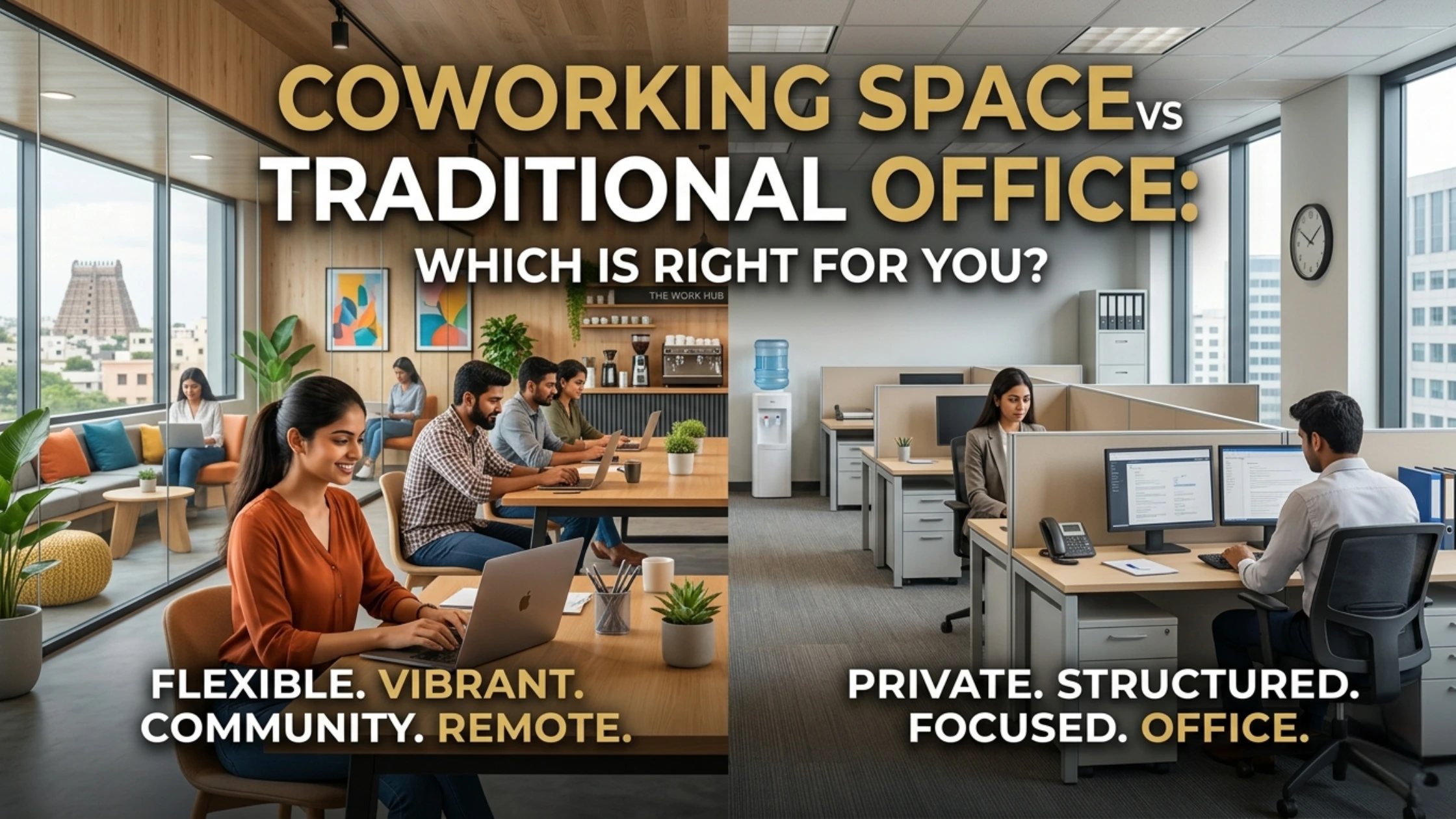
When you think about a coworking space versus an office it really comes down to flexibility versus control. A coworking space gives you a workspace that’s ready to use with plans that are short-term and amenities that are shared. On the other hand a traditional office gives you a space that is dedicated to you and you can customize it fully but you need to sign a long-term lease and set it up yourself. The right choice for you depends on how fast your business is growing, how sure you’re about the size of your team and how much time you want to spend on things like furniture and internet instead of your actual work.
This is not about where you will work. It affects how money you have each month, how quickly you can grow or shrink your business and even how your team works together every day. Let’s look at what sets these two options apart and where each one makes sense.
What a Traditional Office Really Involves
An office is a space that you lease all by yourself usually for a year or more and then you have to build it out yourself. This means you have to:
– Negotiate and sign a lease that lasts a time
– Buy or rent furniture, internet and office equipment
– Hire people to work at the front desk clean the office and take care of maintenance
– Take care of repairs make sure you have power backup and handle security on your own
– Pay a fixed amount every month no matter how many people are actually working there
For a company that is already established with a team that is not changing much and a clear plan for the next five years having control over the office might be worth it. You get a space that’s all yours with your brand on it and no shared areas.. This control means you give up speed and flexibility. And for many businesses that are growing, setting up an office and committing to a lease can be a big problem before the business even starts.
What a Shared Workspace Offers Instead
When you compare a shared office to an office it usually comes down to one thing: being ready to use. A coworking space is already built, furnished and has staff. You can just walk in, plug in and start working. There is no negotiating a lease, no finding vendors for internet or power backup and no waiting for the workspace to be ready.
This works well for:
– Freelancers who need a proper workspace without the overhead of an office
– Startups that do not want to lock up their money in a long lease before they know their business will work
– People who work remotely but want a structured workspace
– Businesses that are growing and need to add or remove seats as their team changes
– Big companies that need a temporary space for a project without setting up a whole new office
The common thread here is uncertainty. About how many people will be on the team how fast the business will grow or how long a certain phase of the business will last. Coworking spaces are made to handle this uncertainty without punishing you for it.
Cost and Commitment: The Real Difference
Traditional offices make you commit first and figure out your space needs later. You sign a lease based on how you think you will grow and then you either have empty space or you have to scramble to expand if you grow faster than you thought.
Coworking spaces do the opposite. You pay for what you need when you need it and you can change as your situation changes. Without renegotiating a lease or losing money. There is no long-term lease, no hassle setting up and no money wasted if your plans change in six months of two years.
To know how much the plans cost it is best to contact Indicoworks directly since the cost depends on the plan and how many seats you need. But the basic idea is the same across the industry: coworking reduces financial risk when things are changing which is exactly when most businesses need that flexibility the most.
Amenities: Do You Get Less With Coworking?
Some people think that shared spaces mean you have to compromise. Internet, no privacy and support that is not consistent.. In a well-run coworking space that is not true. At Indicoworks for example every plan includes:
– internet and reliable power backup
– Air-conditioned workspaces
– Free tea and coffee
– Office cleaning
– A receptionist and facility manager on site
– Parking and security cameras
– Access 24/7 for members who need it
You also get to choose from different formats depending on how much privacy or space you need. From open desks to private cabins, meeting rooms and a big conference hall. In an office you would have to find and manage all of these things yourself and pay for them even if you do not use them every day.
Community and Growth: The Underrated Factor
One thing traditional offices usually do not offer is a built-in community of professionals. When you lease your space your team works alone separate from the rest of the business world around you.
Coworking spaces are often built around the idea. Indicoworks has events for groups of up to 60 people and programs for mentors and sharing skills. The kind of environment where people who graduated from NIT Trichy and are turning their ideas into startups and engineers from BHEL who are starting their businesses end up working together. This mix of backgrounds creates mentorship, potential collaborations and access to people who are solving similar problems. Something a private office does not offer by design.
Matching the Space to Your Stage
Here is a way to think about it:
Choose a traditional office if:
– You know exactly how many people will be on your team and how fast you will grow
– You need a space that is fully custom and branded for a long time
– You have the money and resources to manage the office yourself
Choose a flexible office space if:
– You do not want to commit to a lease that lasts many years
– Your team might change in the next 6-18 months
– You want infrastructure, support and amenities that are already in place
– You would rather spend your time on your business than on office logistics
Indicoworks has plans that are built around this kind of flexibility. Social for full-time access to an open desk, Daily Gypsy for a single day of hot desking Monthly Gypsy for occasional use across any 10 days a month, Jumbo for bigger teams that need a dedicated floor with 50+ seats and Events for gatherings of up to 60 people. Whether you are a freelancer or a corporate team testing a new city there is a plan that is structured around how often you actually need the space, not a fixed lease term.
FAQs
A coworking space is a shared, ready-to-use workspace with flexible, short-term plans and no long lease commitment. A traditional office requires a long-term lease, upfront setup, and independent management of furniture, internet, and facilities. Coworking offers speed and flexibility; a traditional office offers full control and customization.
Coworking spaces typically reduce upfront costs since furniture, Wi-Fi, power backup, and facility staff are already included in the plan. Traditional offices require separate investment in each of these. For exact plan pricing, it’s best to contact Indicoworks directly, as costs vary by plan and seat count.
Freelancers, startups, remote professionals, growing SMEs, and corporate teams testing a new location typically benefit most from coworking. It suits anyone whose team size or plans might change in the next 6–18 months and who wants to avoid a multi-year lease commitment.
A well-equipped shared workspace like Indicoworks includes high-speed Wi-Fi, air-conditioning, power backup, complimentary tea/coffee, office cleaning, receptionist and facility manager support, parking, CCTV, and 24/7 access — all bundled into the plan rather than managed separately.
Yes. Coworking spaces aren’t limited to open desks. Indicoworks offers Private Cabins, Dedicated Desks, Meeting Rooms, and a Conference Hall alongside open desk plans, so individuals and teams can choose the privacy level that fits their work.
Yes. Plans like Jumbo provide a large dedicated floor with 50+ seats, making coworking spaces suitable for growing businesses and corporate teams, not just individuals or small startups.
A Practical Way to Decide
You do not have to make this decision based on guesses. Before you commit to any workspace. Coworking or traditional. It helps to see the space, understand the layout and get a feel for how your team would work there every day.
Indicoworks offers a walk-through before you sign up for anything so you can evaluate the space, the amenities and the community firsthand rather than guessing based on a brochure.
If you are still thinking about your options the next useful question to ask is how coworking pricing plans actually differ from each hot desk versus dedicated desk, versus a private cabin. Since that is often what determines which plan fits your budget and work style best.